

You are using an out of date browser. It may not display this or other websites correctly.
You should upgrade or use an alternative browser.
You should upgrade or use an alternative browser.
College Sports (Football)
- Status
- Not open for further replies.

BillyBob1

- Champaign
BIG needs to follow.

Big 12 to ND - Pipe down.
 www.espn.com
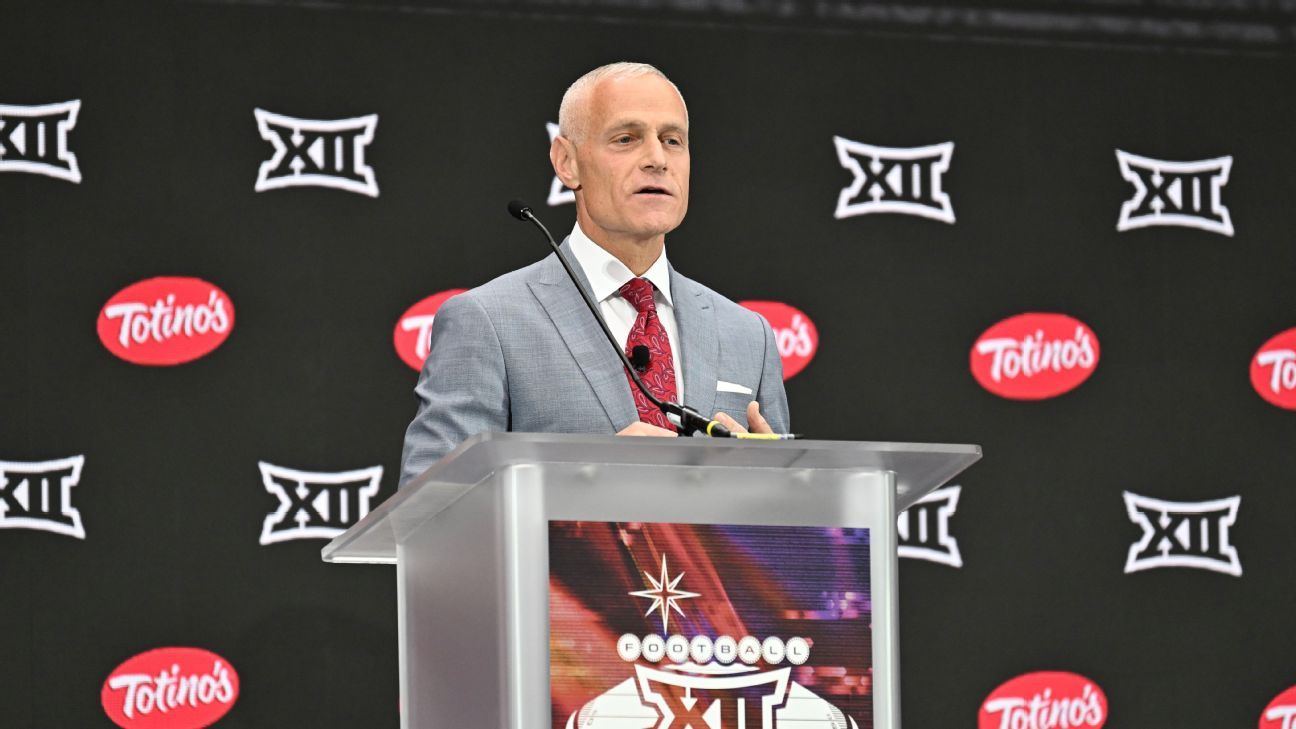
Big 12's Brett Yormark calls out Notre Dame's Pete Bevacqua
Big 12 commissioner Brett Yormark took issue Tuesday with Notre Dame athletic director Pete Bevacqua's criticism this week of the ACC, calling his behavior "egregious."
RabidDawgClassic

- Los Angeles, CA
That’s exactly what I mean. How long will they continue to toss money at something that offers no ROI? A couple years? Three? Five? Even billionaires, I assume, get tired of tossing away money when they get nothing back — unless pride and ego are enough of a return for them.What do you mean by ROI? Donations don't really have an ROI.
if you're asking how long people will contribute millions without a championship that's a great question.
The follow up is funding the next one. Look at Ricketts. The fire sale started before the champagne was mopped up.
illini80

- Forgottonia
Maybe. Or maybe this is the only way many schools will have a sports program in the future? I’m surprised there isn’t more discussion on this.Utah will be a non-figure athletically in ten years. They’re selling the future for a window to win right now.
RabidDawgClassic
- Los Angeles, CA
Here’s how private equity investment works:
1. Company (or in this case school/athletic program) gets huge infusion of money. That money is used to pay down debt, pay salaries, often with raises for executives and run day to day affairs. Partnership is great early on.
2. Private equity firm wants to see return on investment to keep shareholders happy. Odds are, if the company was run the way it was before the infusion when it had massive debt, there won’t be positive ROI or at least not a significant one.
3. In order to turn a profit, the company cuts expenses — everything from employees to the items that make day to day operations function. All except, of course, the high salary executives. “Doing more with less” never works so the company becomes a shell of itself.
4. With the company on its last legs, the executives are cut (often with a decent severance package) and the company is sold off for parts. The private equity firm makes its profit and the shareholders see their ROI. The executives made their money, short term while everyone else — lower level employees and consumers — are left with nothing.
This is how PE investment works the majority of the time. It’s a Faustian bargain. And it’s why those who know call it a payday loan.
1. Company (or in this case school/athletic program) gets huge infusion of money. That money is used to pay down debt, pay salaries, often with raises for executives and run day to day affairs. Partnership is great early on.
2. Private equity firm wants to see return on investment to keep shareholders happy. Odds are, if the company was run the way it was before the infusion when it had massive debt, there won’t be positive ROI or at least not a significant one.
3. In order to turn a profit, the company cuts expenses — everything from employees to the items that make day to day operations function. All except, of course, the high salary executives. “Doing more with less” never works so the company becomes a shell of itself.
4. With the company on its last legs, the executives are cut (often with a decent severance package) and the company is sold off for parts. The private equity firm makes its profit and the shareholders see their ROI. The executives made their money, short term while everyone else — lower level employees and consumers — are left with nothing.
This is how PE investment works the majority of the time. It’s a Faustian bargain. And it’s why those who know call it a payday loan.
Here’s how private equity investment works:
1. Company (or in this case school/athletic program) gets huge infusion of money. That money is used to pay down debt, pay salaries, often with raises for executives and run day to day affairs. Partnership is great early on.
2. Private equity firm wants to see return on investment to keep shareholders happy. Odds are, if the company was run the way it was before the infusion when it had massive debt, there won’t be positive ROI or at least not a significant one.
3. In order to turn a profit, the company cuts expenses — everything from employees to the items that make day to day operations function. All except, of course, the high salary executives. “Doing more with less” never works so the company becomes a shell of itself.
4. With the company on its last legs, the executives are cut (often with a decent severance package) and the company is sold off for parts. The private equity firm makes its profit and the shareholders see their ROI. The executives made their money, short term while everyone else — lower level employees and consumers — are left with nothing.
This is how PE investment works the majority of the time. It’s a Faustian bargain. And it’s why those who know call it a payday loan.
But all of that is impossible to do when they don't have the pull and/or authority.

Saw this yesterday from a PE guy....Here’s how private equity investment works:
1. Company (or in this case school/athletic program) gets huge infusion of money. That money is used to pay down debt, pay salaries, often with raises for executives and run day to day affairs. Partnership is great early on.
2. Private equity firm wants to see return on investment to keep shareholders happy. Odds are, if the company was run the way it was before the infusion when it had massive debt, there won’t be positive ROI or at least not a significant one.
3. In order to turn a profit, the company cuts expenses — everything from employees to the items that make day to day operations function. All except, of course, the high salary executives. “Doing more with less” never works so the company becomes a shell of itself.
4. With the company on its last legs, the executives are cut (often with a decent severance package) and the company is sold off for parts. The private equity firm makes its profit and the shareholders see their ROI. The executives made their money, short term while everyone else — lower level employees and consumers — are left with nothing.
This is how PE investment works the majority of the time. It’s a Faustian bargain. And it’s why those who know call it a payday loan.
Private equity guy notes:
-Does *everyone* need helmets?
-What if we replaced this scout team with AI?
-What if we bought Weber State, rolled it up into our operations, then eliminated redundancy?
-Our fan sweatshirts transition to a subscription model, can't be owned outright
And....
- sell the field to a REIT, and lease it back in perpetuity

Brilliant! (And very spot on!) They serve an important role in the business world (mainly optimizing poorly run companies or assets), but they are wholly incongruent with the college model/tradition (until now I guess).Saw this yesterday from a PE guy....
Private equity guy notes:
-Does *everyone* need helmets?
-What if we replaced this scout team with AI?
-What if we bought Weber State, rolled it up into our operations, then eliminated redundancy?
-Our fan sweatshirts transition to a subscription model, can't be owned outright
And....
- sell the field to a REIT, and lease it back in perpetuity
RabidDawgClassic
- Los Angeles, CA
The infusion of money buys that authority. No one gives you money for free.But all of that is impossible to do when they don't have the pull and/or authority.
Not the deal with the B1G.The infusion of money buys that authority. No one gives you money for free.
From the Utah Deal
"Importantly, the university is not selling parts of our athletics department, ceding operational control to a third party or relinquishing control of any facilities," Randall and Harlan wrote to the Utah community. "Decisions regarding sports, coaches, scheduling, operations, student-athlete care and other athletics matters will remain solely with the athletics department. ... The university's foundation will appoint a majority of the board of directors of Utah Brands & Entertainment, and the board will be chaired by the athletics director."
"Importantly, the university is not selling parts of our athletics department, ceding operational control to a third party or relinquishing control of any facilities," Randall and Harlan wrote to the Utah community. "Decisions regarding sports, coaches, scheduling, operations, student-athlete care and other athletics matters will remain solely with the athletics department. ... The university's foundation will appoint a majority of the board of directors of Utah Brands & Entertainment, and the board will be chaired by the athletics director."
MoCoMdIllini

- Montgomery County, Maryland
The biggest part of that cost could be the cheerleading squad. I understand they are big time in that arena.Saw this yesterday from a PE guy....
Private equity guy notes:
-Does *everyone* need helmets?
-What if we replaced this scout team with AI?
-What if we bought Weber State, rolled it up into our operations, then eliminated redundancy?
-Our fan sweatshirts transition to a subscription model, can't be owned outright
And....
- sell the field to a REIT, and lease it back in perpetuity
The Tony Hulman family was getting ready to sell the Indianapolis motor Speedway. It came down to selling it to a private equity firm or to Roger Penske. I cannot express to you the relief I have that they chose Penske as the buyer. The Indy 500 would be withering on the vine if not.

This is silly. ND has more value to CFB than any Big12 school and arguably more than most of them combined..Big 12 to ND - Pipe down.
Big 12's Brett Yormark calls out Notre Dame's Pete Bevacqua
Big 12 commissioner Brett Yormark took issue Tuesday with Notre Dame athletic director Pete Bevacqua's criticism this week of the ACC, calling his behavior "egregious."
Interesting that IU is ranked so low on this list. I thought they were top 3 in the B10 this year in NIL?

 www.cbssports.com
Which CFP teams have the most money? Breaking down field by NIL spending power
Elite spenders highlight this year's playoff bracket, but some teams are doing more with less
www.cbssports.com
There is a time and place for PE - when companies are valued at 6 X EBITDA and are under-managed and under-levered, PE makes sense. You upgrade management and systems, add some debt, get some growth - everybody comes out ahead. I can't remember the last time it's been like that - maybe in 2010? Nowadays, the trend is to buy a mediocre company for 12 X Pro Forma EBITDA, lever it at 6-7 X EBITDA, maximize profit in year 3 of the hold and find a bigger firm to take it off their hands.Here’s how private equity investment works:
1. Company (or in this case school/athletic program) gets huge infusion of money. That money is used to pay down debt, pay salaries, often with raises for executives and run day to day affairs. Partnership is great early on.
2. Private equity firm wants to see return on investment to keep shareholders happy. Odds are, if the company was run the way it was before the infusion when it had massive debt, there won’t be positive ROI or at least not a significant one.
3. In order to turn a profit, the company cuts expenses — everything from employees to the items that make day to day operations function. All except, of course, the high salary executives. “Doing more with less” never works so the company becomes a shell of itself.
4. With the company on its last legs, the executives are cut (often with a decent severance package) and the company is sold off for parts. The private equity firm makes its profit and the shareholders see their ROI. The executives made their money, short term while everyone else — lower level employees and consumers — are left with nothing.
This is how PE investment works the majority of the time. It’s a Faustian bargain. And it’s why those who know call it a payday loan.
RabidDawgClassic
- Los Angeles, CA
Translation:From the Utah Deal
"Importantly, the university is not selling parts of our athletics department, ceding operational control to a third party or relinquishing control of any facilities," Randall and Harlan wrote to the Utah community. "Decisions regarding sports, coaches, scheduling, operations, student-athlete care and other athletics matters will remain solely with the athletics department. ... The university's foundation will appoint a majority of the board of directors of Utah Brands & Entertainment, and the board will be chaired by the athletics director."
“Don’t worry! There will obviously be no strings attached to this money. We’ve been assured the PE company is giving us this money out of the kindness of their hearts. Isn’t that nice of them? We’ll get around to reading the fine print soon. We’re sure it’s just boilerplate material. Trust us on this, okay? Just because we horribly mismanaged our budget in the first place doesn’t mean we’ll do it again or anything. ‘Past performance,’ as they say.”
Its a public university. When the Ink is dry, FOIA it, see if what you wrote is there.Translation:
“Don’t worry! There will obviously be no strings attached to this money. We’ve been assured the PE company is giving us this money out of the kindness of their hearts. Isn’t that nice of them? We’ll get around to reading the fine print soon. We’re sure it’s just boilerplate material. Trust us on this, okay? Just because we horribly mismanaged our budget in the first place doesn’t mean we’ll do it again or anything. ‘Past performance,’ as they say.”
Illini in Italy

- Illini HQ, Florida Panhandle
Thanks ND
 www.cbssports.com
Bowl season in trouble? LA Bowl will fold after Saturday's Washington vs. Boise State matchup, per report
The total number of bowls appears to be on the decline with the growth of the CFP
www.cbssports.com

More playing time for Josh McCray in the bowl game?
Stop me if you've heard this before

Stop me if you've heard this before
Two Georgia football players arrested on shoplifting charges
A pair of Georgia football freshmen players — including one starter — were arrested Friday on shoplifting charges. Here are initial details.
www.onlineathens.com

- Status
- Not open for further replies.