
College Sports (Basketball)

Status
Not open for further replies.
#101      
I am willing to negotiate. But I would say three things.

1. Playing for one school and one school only being the normal and most common career path of a revenue sport athlete is maybe the single most important bedrock principle of the whole operation. That's the invisible thread tying fans to this minor league sport in such an unusual and hard-to-explain way. They are ours and we are theirs forever in a way pro sports can't imitate. That doesn't mean NO transfers, but it means rare transfers.

2. Transfer liberalization was brought to the sport INSTEAD of paying the players, in hopes of killing the momentum toward paying the players. That's historical fact. In a world in which the players are being adequately compensated for their labor, the ethical and moral justification for them to have total freedom of where to play every year is much lesser and there would have been no reason for those expectations to get baked in.

3. I have never thought the sit-out year was harsh or really even a punishment at all in the first place, and in a world in which the players are paid there's even less support for that viewpoint. Practicing, traveling, being a part of the team, being handsomely paid, and just not being able to impact results competitively for a year is a price to be paid, no question, but a small price to be paid relative to the enormous impact it has on #1.

(I like this version less, but another way you could pursue similar objectives would be to just ban Power Five-to-Power-Five transfers full stop, but have no restrictions on transfers into our out of the Power Five)
I like one free transfer. You choose the wrong college as a 17 year old high school student, sure, you get a do-over. Transferring a second time requires a sit out year. And as long as NIL is a part of the game, I'm also not mad at schools having a larger retention bucket to further incentivize staying.
 
#103      
Transfers have never resulted in a loss of a year of eligibility
Okay, what if we brought back redshirts and 5 to play 4?

That's what I would do anyway if I had total control, I think that's a better model and obviously the traditional one.

There is necessarily going to have to be some sort of resolution of the tension between a player's ability to PLAY for X number of years versus their ability to EARN for X number of years (transfers, injuries, etc).

For me, in a world where the financial returns to an individual player-season are seven figures, the interests of fairness say everybody should have the same number of years to earn. But again, it's negotiable.

And more selfishly, would we want to live in a world where guys like Kenny Battle, Jeff George never end up playing for the Illini?
They sat a year and became legends and icons at their new schools regardless. The idea that the sit out year is an unsurmountable barrier to a player finding the right place for them is misguidedly strong in this discourse. Leave everything else the same (i.e. an unfettered pay-for-play market and the House settlement revenue sharing) and bring back no-exceptions sit out years and there would still be a very robust portal market every offseason. It just wouldn't swallow the sport the way it has.

The old transfer rules with the new player compensation rules would give guys way MORE freedom and options than Kenny Battle or Larry Bird had, not less.
 
#104      
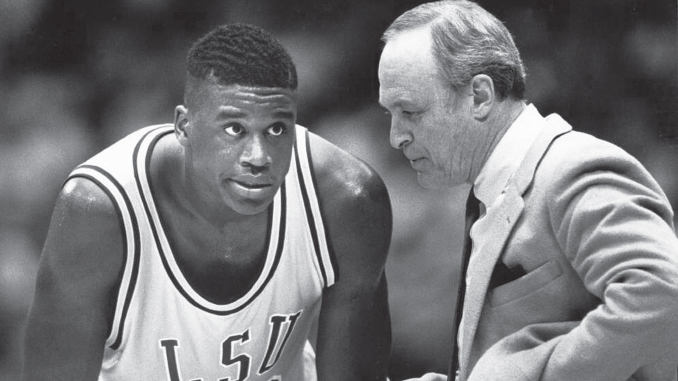
Former LSU coach Dale Brown dies at 90. Memorable two-game series that started with the Flying Illini beating them 127-100 (with only eight threes!) down there. We ran over them so badly, at one point Brown asked, "Which damn one of them was that dunking on us now?!" When we won two years later in Champaign, the answer was "Rennie Clemons" (kidding).

In the December '88 game, we shot 68 PERCENT from the field. Take out the 2-6 from non-rotation guys put in at the end, we were over 70.

 
Last edited:
#107      
Okay, what if we brought back redshirts and 5 to play 4?
IMO there was too much arbitrariness in who got the redshirts, and the time it took for schools to get answers. I like think the 5/5 with no exceptions is an improvement. I'd rather see 4/4, no exceptions.

I'm okay with the first transfer is free, and a 1 year sit out for additional transfers. This effectively limits players to 2 transfers max -- they run out of eligibility.

If the laws change so that schools can sign/enforce multi-year contracts, I think a lot of this gets easier. e.g. We will pay you 1M (frosh), 2M, 2M, 3M 4M (super senior). There are kickers each year for being named 1st (1M) / 2nd team (500k) all conference, and 1st (2M) /2nd team (1M) All American. There are additional kickers for making the E8, FF, etc. Adjust the numbers to taste.
 
#108      
IMO there was too much arbitrariness in who got the redshirts, and the time it took for schools to get answers. I like think the 5/5 with no exceptions is an improvement. I'd rather see 4/4, no exceptions.

I'm okay with the first transfer is free, and a 1 year sit out for additional transfers. This effectively limits players to 2 transfers max -- they run out of eligibility.

If the laws change so that schools can sign/enforce multi-year contracts, I think a lot of this gets easier. e.g. We will pay you 1M (frosh), 2M, 2M, 3M 4M (super senior). There are kickers each year for being named 1st (1M) / 2nd team (500k) all conference, and 1st (2M) /2nd team (1M) All American. There are additional kickers for making the E8, FF, etc. Adjust the numbers to taste.
I also like the idea of multi-year contracts, but of course I can't know if teams/players would actually go that route very often and/or for more than 2 years. I think it would at least require NCAA or all power conferences to agree to enforce them, since schools generally don't want to be in the position of having to sue players or other schools if someone gets poached.
 
#109      
I also like the idea of multi-year contracts, but of course I can't know if teams/players would actually go that route very often and/or for more than 2 years. I think it would at least require NCAA or all power conferences to agree to enforce them, since schools generally don't want to be in the position of having to sue players or other schools if someone gets poached.
Clawing money back is hard, thus my route of escalating payments (a back loaded contract).
 
#110      
Cracking Up Lol GIF
 
#114      
I also like the idea of multi-year contracts,

If it goes that route, they should have buy-out clauses. Say you have a top-tier player you offer $1.5 mil/yr, for 2 years. If the contract has a 2nd year buyout of $500k, it makes it so you have $2mil available to replace him. Just need to spell out the timing so it actually works with the transfer window as intended.
IMO, as the money gets bigger, the contracts should get more sophisticated to spread the risk.
 
#117      
Eh I usually like Ryan Hammer's stuff, but this stat is kind of a misrepresentation if what he's going for is "November matters and Champions win in November"

I think what this stat actually shows (if anything) is that Championship teams historically don't play anyone in November. I went back and looked through the schedules of the last 10 CBB champions, and the list below is the TOTAL games played by Champions against opponents ranked 25 or better in final KenPom:

1793121082420.png


I think if you want to conform to this statistic as a Championship team, don't get upset by a good team that's worse than you in November.

Of the top 10 KP teams, only Duke, Illinois, Arizona and MSU have 2 or more KP top 25 games in November. Florida has 1, and Houston, Kansas, Iowa St, Alabama and Texas all have 0.

Uconn has the toughest schedule of anyone and has 6 top-25 KP opponents before Christmas. They'll be battle-tested to shred through another weak Big East.
 
#120      
Eh I usually like Ryan Hammer's stuff, but this stat is kind of a misrepresentation if what he's going for is "November matters and Champions win in November"

I think what this stat actually shows (if anything) is that Championship teams historically don't play anyone in November. I went back and looked through the schedules of the last 10 CBB champions, and the list below is the TOTAL games played by Champions against opponents ranked 25 or better in final KenPom:

View attachment 52169

I think if you want to conform to this statistic as a Championship team, don't get upset by a good team that's worse than you in November.

Of the top 10 KP teams, only Duke, Illinois, Arizona and MSU have 2 or more KP top 25 games in November. Florida has 1, and Houston, Kansas, Iowa St, Alabama and Texas all have 0.

Uconn has the toughest schedule of anyone and has 6 top-25 KP opponents before Christmas. They'll be battle-tested to shred through another weak Big East.

Your reaction was the same as mine --thanks for doing the research.

That said, I do think that championship teams have a collective swagger and pride that helps them avoid upsets.
 
#125      
$5 million is what the #15 NBA lottery pick gets. The system seems to be broken.
somebody is paying that money to the kids.... why would I feel bad for the people paying for something?

they are very far down the list of people I'm empathetic towards

as for the kids, they have elite skill and projected skill in their field of choice especially over their peers in that field... they deserve to be compensated especially with high school games being televised and monetized now more than ever. add in shoe companies, tournament and aau circuits, etc... plenty of money going around. prefer it going to the people who actually generate it
 
Status
Not open for further replies.
Back