
$770 per semester in 1976. My parents were extremely happy that I got a scholarship from being an Illinois State Scholar that covered tuition!I think my first semester in 1969 it was about $250...


You are using an out of date browser. It may not display this or other websites correctly.
You should upgrade or use an alternative browser.
You should upgrade or use an alternative browser.
NCAA, Power 5 agree to let schools pay players
- Status
- Not open for further replies.
Battle89

- Cary-Grove, the better Trojan team
Your starting point is much higher than mine, and I also sourced U of I documents. Not wanting to start a back and forth, just saying there are a lot of numbers out there the farther you go back.Numbers are from the UIUC registrar site:
1987: $2700/sem. There were about $250/sem in fees on top of that
2022: tuition and fees are $6350 base rate or $8800 tuition+fees for eng. (I used the base rate + fees in my initial calculations that said ~even)
(Between 1983 and 1987 tuition went from $850/sem + ~$100 fees to $2700 + ~$250 fees.)
An inflation calculator says 1 dollar in 1987 is the equivalent 2.58 in 2022. ($2700+$250) * 2.58 = $7611
So I guess apples to apples would be $8800/$7611, which is a 15% increase.
If others have different numbers, or see an error in the calculations, please let me know.
Your original premise goes against everything I have read and lived re: college tuition for the past thirty years, and my numbers at least do not agree.
I paid $120 a semester from 1965-1969. Came back for fall senester '69 and they raised it to $200! That was a 67%increase. I was incensed!
I could literally work a construction job during summer and pay for my whole college year, about $1500 total, at the best accounting school in the country.
My three kids all went to private colleges in the '90s and we paid 25k+ per school year. They barely earned enough for spending money and books....
Those same schools are now about $45k per year.
I'm also old enough to be in the cohort that could afford college by having summer jobs and saving most of it because my parents made me. Got to keep some, but most had to go in the bank. I graduated just before the 1992 changes to the federal programs that let students borrow unsubsidized loans regardless of need. That change gave students access to a lot more money they wouldn't have been able to borrow, and I think that contributed to colleges charging more and more (15% over inflation seems ridiculous low to me; I checked the US CPI for college, and I found the index has gone from 58 in 1978 to 927 in 2024). The more power students had with that money, the more they could demand colleges cater to them, which I think has had profound effects on how they're run, in addition to how they justify charging as much as they do. I feel sorry for kids having to figure this out today. If anything goes wrong over the 4-5 or so years it takes and they don't get their degree, they have a mortgage to pay without the income needed to pay it. And some degrees you can't payback even if you finish. If I had dropped out, I was out 4 months work, tops, and if I worked my through to a degree I was all set. Very different era for going to college.

It has never been 'done fairly' before, so why would you expect that to happen now ? ?Im with you for the most part
but how do you imagine ownership or control and governing body of the Power 4 football teams ? its a hard concept to imagine how thats done fairly
One of the reasons UCLA started the conversation with the B1G to begin with was that they're multiple millions in the hole in their athletic programs.... They desperately needed to get to the B1G to try to start balancing their budget deficit... Besides, if you think law suits are too plentiful now, eliminate sports and watch them increase 10-fold.... LOL..I don’t buy those numbers on face value. If a school lost 30 million to have athletics wouldn’t you stop sports. There would be no incentive to keep it. Why would you keep pouring more money in if you were losing money.
My guess there is money that the athletic department is directly responsible for generating but on the accounting side it is not counted as profit for the department but goes to the university
You cannot convince me for one second universities are hurting for money and if they are they have poor leadership

I finished finals on Friday and started work on Monday in the loop--February 2, 1970. Graduation wasn't until June. I went back for several basketball games but had them mail my diploma to me...I'm also old enough to be in the cohort that could afford college by having summer jobs and saving most of it because my parents made me. Got to keep some, but most had to go in the bank. I graduated just before the 1992 changes to the federal programs that let students borrow unsubsidized loans regardless of need. That change gave students access to a lot more money they wouldn't have been able to borrow, and I think that contributed to colleges charging more and more (15% over inflation seems ridiculous low to me; I checked the US CPI for college, and I found the index has gone from 58 in 1978 to 927 in 2024). The more power students had with that money, the more they could demand colleges cater to them, which I think has had profound effects on how they're run, in addition to how they justify charging as much as they do. I feel sorry for kids having to figure this out today. If anything goes wrong over the 4-5 or so years it takes and they don't get their degree, they have a mortgage to pay without the income needed to pay it. And some degrees you can't payback even if you finish. If I had dropped out, I was out 4 months work, tops, and if I worked my through to a degree I was all set. Very different era for going to college.
I doubt if there is any such someone, esp. now that (in the P five conferences) the universities can pay players directly.NIL - how does it work? Is there a percentage of logo items put into a kitty and then players get a percentage of the total. If so we can’t guarantee a player will get a specific amount can we? Can someone fill me in as to how it actually works?
UCLA deal with Under Armor ended via law suit and Nike didn’t pay as much. My guess is they started to over spend predicting money was coming in. Prior to 2018 they were profitable. That was with the PAC 12 having horrible tv deals. PAC 12 with that tv deal was barely better off than the MWC and the PAC 12 schools spent a lot on coaches. Yes going to the Big Ten was the only option because of conference and school mismanagementOne of the reasons UCLA started the conversation with the B1G to begin with was that they're multiple millions in the hole in their athletic programs.... They desperately needed to get to the B1G to try to start balancing their budget deficit... Besides, if you think law suits are too plentiful now, eliminate sports and watch them increase 10-fold.... LOL..
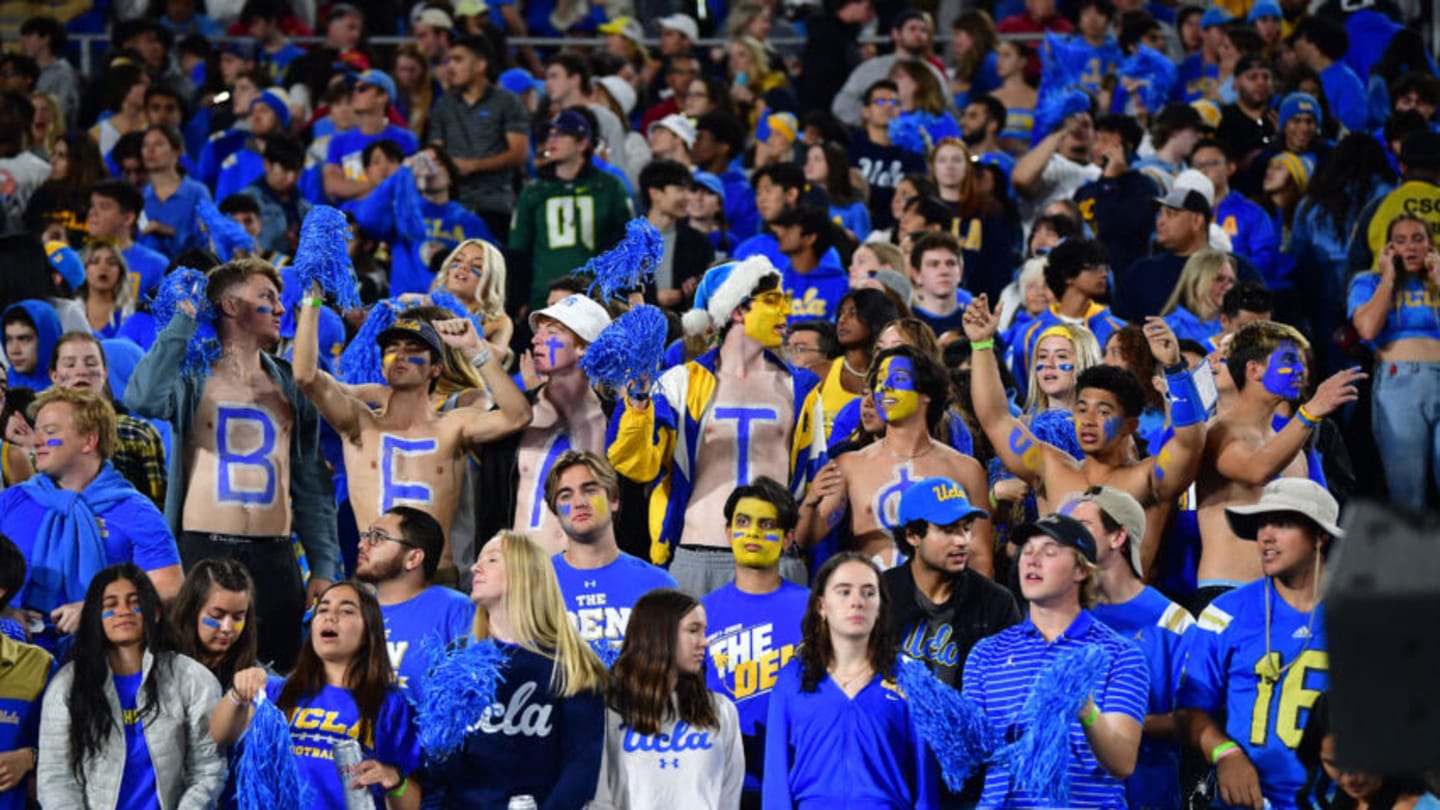
UCLA: Where do they rank in Revenue and Expenses
A new report has come out on the revenue and expenses of 232 NCAA athletic programs. UCLA ranks in the top 50 of the USA Today report.
 gojoebruin.com

I graduated in 2004 and paid less than $2,700/semester without aid or scholarship.Numbers are from the UIUC registrar site:
1987: $2700/sem. There were about $250/sem in fees on top of that
2022: tuition and fees are $6350 base rate or $8800 tuition+fees for eng. (I used the base rate + fees in my initial calculations that said ~even)
(Between 1983 and 1987 tuition went from $850/sem + ~$100 fees to $2700 + ~$250 fees.)
An inflation calculator says 1 dollar in 1987 is the equivalent 2.58 in 2022. ($2700+$250) * 2.58 = $7611
So I guess apples to apples would be $8800/$7611, which is a 15% increase.
If others have different numbers, or see an error in the calculations, please let me know.
Some people have said they don't want to pollute the thread with their beliefs. I would appreciate DMs to this account with year/major/cost for those with different memories. This is just my curiosity.
With respect to our memories, the different numbers may all be true. Tuition varies greatly by college at UIUC -- see my earlier mistake of using the baseline LAS 2022 numbers vs. engineering when doing the comparison. When I attended UIUC, engineering tuition was ~25% higher than most of LAS. It looks like the difference between engineering and LAS may be even larger now. If I had done the comparison for a year earlier than 1987, then the numbers would differ by significantly more. E.g. vs. 1983, tuition is up ~3.7x inflation.
With respect to our memories, the different numbers may all be true. Tuition varies greatly by college at UIUC -- see my earlier mistake of using the baseline LAS 2022 numbers vs. engineering when doing the comparison. When I attended UIUC, engineering tuition was ~25% higher than most of LAS. It looks like the difference between engineering and LAS may be even larger now. If I had done the comparison for a year earlier than 1987, then the numbers would differ by significantly more. E.g. vs. 1983, tuition is up ~3.7x inflation.
IlliniKat91

- Chicago, IL
In what program? I'm only asking because I graduated from LAS (way fewer fees when you don't have to take lab sections as an English/Spanish major) 5 years after you and did have scholarships and paid way more than that.I graduated in 2004 and paid less than $2,700/semester without aid or scholarship.
Edit: went digging. Base tuition in 2001 was $1862. When you thrown in the fees, each semester was about $2500, depending on your program.
Gonna go have a beer and be mad about how education has become a business and screwed people now.
Last edited:

It is correct that higher education is screwing people over.
Everyone but the administrators, actually: screwed over first and foremost are students, secondarily though critically their trusting and hopeful families and lastly the smart and correctly (cynically? no, that is unfair) self-preserving professors. TAs? They are of course not the problem though they would be well-advised not to allow themselves to be taken advantage of (please don't go to graduate school unless you are -- by nature (did you read that? probably not, sigh) -- an academic.)
To be blunt: graduate student unions are not effective tools in creating or sustaining a path to academic achievement (if that is an annoying and elusive idea please contact me privately here as I wish to elaborate in a fashion that I hope will be positive for anyone associated or hoping to be associated with the University of Illinois. Or alternatively, I am certain there are other U of I grads here who can advise at least as well as I can.)
Higher Education is not a business. That implies sustainability for at least some period of time. Which means that folks on all sides of the table have the belief that things are fair. But they're not -- it is disappointingly a scam. (Not ONLY a scam, doggone it, but I am making a point here: many, many talented but not incredibly-talented folks are taken in by the glory of the institution and the pulse-pounding opportunities it to this day offers. That might well describe me, so please re-read my sentiment before you slam me: students are important to me.)
And yet I mean that many talented if perphaps not supremely gifted young people (that might be me today, so watch your words!) are too often taken in. If that angers you as it does me, good. If you think I am being negative, well, I agree: I am a realist by nature and am strongly averse to negativity and conspiracy theories and whining about how it is someone else's fault.
I know that sounds harsh and ugly. I know students and their families are not scammers no are they aware of the situation -- how on earth can they be? Professors are smart but are rarely heartless scammers. So where lies the problem? I can tell you, though even the culprits do not necessarily lack good intentions: it is the Office of Admissions and it is even more the Office of the President or Chancellor: those are the culprits.
Everyone but the administrators, actually: screwed over first and foremost are students, secondarily though critically their trusting and hopeful families and lastly the smart and correctly (cynically? no, that is unfair) self-preserving professors. TAs? They are of course not the problem though they would be well-advised not to allow themselves to be taken advantage of (please don't go to graduate school unless you are -- by nature (did you read that? probably not, sigh) -- an academic.)
To be blunt: graduate student unions are not effective tools in creating or sustaining a path to academic achievement (if that is an annoying and elusive idea please contact me privately here as I wish to elaborate in a fashion that I hope will be positive for anyone associated or hoping to be associated with the University of Illinois. Or alternatively, I am certain there are other U of I grads here who can advise at least as well as I can.)
Higher Education is not a business. That implies sustainability for at least some period of time. Which means that folks on all sides of the table have the belief that things are fair. But they're not -- it is disappointingly a scam. (Not ONLY a scam, doggone it, but I am making a point here: many, many talented but not incredibly-talented folks are taken in by the glory of the institution and the pulse-pounding opportunities it to this day offers. That might well describe me, so please re-read my sentiment before you slam me: students are important to me.)
And yet I mean that many talented if perphaps not supremely gifted young people (that might be me today, so watch your words!) are too often taken in. If that angers you as it does me, good. If you think I am being negative, well, I agree: I am a realist by nature and am strongly averse to negativity and conspiracy theories and whining about how it is someone else's fault.
I know that sounds harsh and ugly. I know students and their families are not scammers no are they aware of the situation -- how on earth can they be? Professors are smart but are rarely heartless scammers. So where lies the problem? I can tell you, though even the culprits do not necessarily lack good intentions: it is the Office of Admissions and it is even more the Office of the President or Chancellor: those are the culprits.
Illini in Italy

- Illini HQ, Florida Panhandle
Under what legal concept? That the university has a constitutional obligation to provide athletic opportunities to students? On one hand, you can sue anyone for anything . . . that doesn't mean you will prevail.One of the reasons UCLA started the conversation with the B1G to begin with was that they're multiple millions in the hole in their athletic programs.... They desperately needed to get to the B1G to try to start balancing their budget deficit... Besides, if you think law suits are too plentiful now, eliminate sports and watch them increase 10-fold.... LOL..
I know when I went to school professors made good money to be well offIn what program? I'm only asking because I graduated from LAS (way fewer fees when you don't have to take lab sections as an English/Spanish major) 5 years after you and did have scholarships and paid way more than that.
Edit: went digging. Base tuition in 2001 was $1862. When you thrown in the fees, each semester was about $2500, depending on your program.
Gonna go have a beer and be mad about how education has become a business and screwed people now.
But they made their money off their books. Every year they change the edition so you had to buy the new one to do the problems. Some professors were better than others. Not sure how bad it is today
Also the research grants that come in help offset a lot of costs
University is big business and if u look at endowments u can’t tell me they don’t want to make money
IlliniKat91
- Chicago, IL
I work as a high school counselor, so I know exactly how and why tuition costs have exploded. My comment was more meant to be tongue in cheek, but you're right about books. When I was a freshman in 05-06, they were still printing a "new" edition of the Psych 100 book each semester so we could never sell it back and they could make bank off it.I know when I went to school professors made good money to be well off
But they made their money off their books. Every year they change the edition so you had to buy the new one to do the problems. Some professors were better than others. Not sure how bad it is today
Also the research grants that come in help offset a lot of costs
University is big business and if u look at endowments u can’t tell me they don’t want to make money
The worst part though is administrative salaries. Each university wants to get the biggest and best names to be part of their admin and they give them salaries that are through the roof to do it. That's what students are paying for more than anything else.
I am an old coot and my first year (1968) at Illinois the semester tuition was $141.00. No Lie!In what program? I'm only asking because I graduated from LAS (way fewer fees when you don't have to take lab sections as an English/Spanish major) 5 years after you and did have scholarships and paid way more than that.
Edit: went digging. Base tuition in 2001 was $1862. When you thrown in the fees, each semester was about $2500, depending on your program.
Gonna go have a beer and be mad about how education has become a business and screwed people now.
The administrative bloat is absolutely insane(and really pervasive throughout the entirety of our economy not just Academia).I work as a high school counselor, so I know exactly how and why tuition costs have exploded. My comment was more meant to be tongue in cheek, but you're right about books. When I was a freshman in 05-06, they were still printing a "new" edition of the Psych 100 book each semester so we could never sell it back and they could make bank off it.
The worst part though is administrative salaries. Each university wants to get the biggest and best names to be part of their admin and they give them salaries that are through the roof to do it. That's what students are paying for more than anything else.
You have a bunch of schools with more administrative staff than students, and numerous others that are nearly at a 1:1 ratio between admin and undergrads.
I will give Illinois some credit though as they only have 8k admin vs 35k undergrad(50k total). Still probably way more administrative staff than necessary though and more of that money could be given to faculty and into actually teaching students.
Thoughtful article from Loren Tate on the subject. He's right about one thing - the non revenue sports spend a ridiculous amount of money on travel. With the addition of the West Coast teams, there's no reason for these boondoggles to Florida, Texas, Caribbean, Hawaii, etc. Anyone think the Maui invitational will survive? Maybe these tournaments get sponsors like football bowl games and pay the teams to travel to their tournaments. Doubt it. Hate to think any of our 19 sports will get cut - Loren makes a valid point that these non revenue sports could be supported by student fees. And of course we could probably lose some administrators too. https://www.news-gazette.com/sports...cle_7c07736d-e034-5bdc-8a5c-a3691f0e17bb.html
Illini in Italy
- Illini HQ, Florida Panhandle
I wonder how many faculty are actually teaching? In my time at the UI probably 75% of my classes were taught by TA's . . .The administrative bloat is absolutely insane(and really pervasive throughout the entirety of our economy not just Academia).
You have a bunch of schools with more administrative staff than students, and numerous others that are nearly at a 1:1 ratio between admin and undergrads.
I will give Illinois some credit though as they only have 8k admin vs 35k undergrad(50k total). Still probably way more administrative staff than necessary though and more of that money could be given to faculty and into actually teaching students.
. . . and as far as the money goes, how many new buildings on campus have gone up since 1985 versus those from 1945-1985? (I don't know the answer btw). Enrollment on campus has increased, from 36,000 in 1991 to ~45,000 in 2014 to 54,000 in 2023 according to www.uillinois.edu.
I wasn't even mentioning faculty which isn't included in those numbers. Simply administrative staff.I wonder how many faculty are actually teaching? In my time at the UI probably 75% of my classes were taught by TA's . . .
. . . and as far as the money goes, how many new buildings on campus have gone up since 1985 versus those from 1945-1985? (I don't know the answer btw). Enrollment on campus has increased, from 36,000 in 1991 to ~45,000 in 2014 to 54,000 in 2023 according to www.uillinois.edu.
Illinois has roughly 2500 faculty members vs 8000 administrative staff.
I have some predictions for the future on the topic:
There is going to be inequality between schools and what they spend. Just like in MLB there is disparity between the Yankees and the A's payroll.
Athletic Departments as we know them will fold and there will be no more scholarship athletes.
All of the sports teams will follow a RSO Illini hockey model. Football and MBB will be individualized club teams to allow money to stay in the sport instead of supporting the non-revenue teams. The RSO can hire as much admin support as they want and disperse money to players as they see fit based on their income. There can be W football or WBB RSO's to even out participation.
Universities can still profit as a landlord and work out arrangements similar to the Chicago Bears and the Chicago Park District.
Current non-revenue sports as RSO's will schedule a large amount of close by teams like ISU, Eastern, and Purdue.
There is going to be inequality between schools and what they spend. Just like in MLB there is disparity between the Yankees and the A's payroll.
Athletic Departments as we know them will fold and there will be no more scholarship athletes.
All of the sports teams will follow a RSO Illini hockey model. Football and MBB will be individualized club teams to allow money to stay in the sport instead of supporting the non-revenue teams. The RSO can hire as much admin support as they want and disperse money to players as they see fit based on their income. There can be W football or WBB RSO's to even out participation.
Universities can still profit as a landlord and work out arrangements similar to the Chicago Bears and the Chicago Park District.
Current non-revenue sports as RSO's will schedule a large amount of close by teams like ISU, Eastern, and Purdue.
Good summary. My daughter played field hockey at Northwestern from 2010-2014. The Big10 budgets back then were similar to what they will look like going forward (i.e., subtract about $30mln-$50mln from current spending plans). Couple of things. 1. The team bussed everywhere except ONE preseason flight to the Northeast/California/Carolina and one flight to Maryland/Rutgers. So they took a bus to Penn St., Ohio St., Mich St., Ann Arbor. IU, and all of the MAC teams. 2. Not everyone traveled. 3. For lunch sometimes chocolate milk was served. And that's it. Just a carton of milk. 4. All flights were red eyes out of Midway on Southwest.I have some predictions for the future on the topic:
There is going to be inequality between schools and what they spend. Just like in MLB there is disparity between the Yankees and the A's payroll.
Athletic Departments as we know them will fold and there will be no more scholarship athletes.
All of the sports teams will follow a RSO Illini hockey model. Football and MBB will be individualized club teams to allow money to stay in the sport instead of supporting the non-revenue teams. The RSO can hire as much admin support as they want and disperse money to players as they see fit based on their income. There can be W football or WBB RSO's to even out participation.
Universities can still profit as a landlord and work out arrangements similar to the Chicago Bears and the Chicago Park District.
Current non-revenue sports as RSO's will schedule a large amount of close by teams like ISU, Eastern, and Purdue.
Many (most? all?) of the new buildings are single alum donations. Early on, each building made the UIUC deficit worse, as the donor would pay for the construction, and leave the operation and maintenance costs to UIUC. Sometime in the 90's UIUC changed the policy so that any new building donations had to also include money for ongoing operations and maintenance.
The northern quad didn't exist in 1985. There was an open field with the Old Man's Gym on the south, Beckman on the north, and Civil (Newmark - before its remodel and two extensions) on the SE corner. Everything else is new. 1985 is also about the time that the new engineering library (Grainger?) opened, and the new CS building (The one before Siebel) was built on Springfield around the old DCL.
The northern quad didn't exist in 1985. There was an open field with the Old Man's Gym on the south, Beckman on the north, and Civil (Newmark - before its remodel and two extensions) on the SE corner. Everything else is new. 1985 is also about the time that the new engineering library (Grainger?) opened, and the new CS building (The one before Siebel) was built on Springfield around the old DCL.

- Status
- Not open for further replies.