
You are using an out of date browser. It may not display this or other websites correctly.
You should upgrade or use an alternative browser.
You should upgrade or use an alternative browser.
College Athletics Enters Revenue Sharing Era
- Status
- Not open for further replies.


Here we go.... beginning of the end? Or will the fans hang on despite the professionalization of NCAA men's Football/Basketball these next 5-10 years before a decline? I think we can all honestly admit, not 1 single sport outside of those even matter. Do we, as fans, figure how to develop and maintain the mercenary 1 year rotation of players and and at the same time satisfy our long-term/lifetime loyalties? Billion dollar question.
Illini in Italy

- Illini HQ, Florida Panhandle
RabidDawgClassic

- Los Angeles, CA
I still don’t see how anyone thinks this is gonna curtail the high NIL deals? All this is doing is adding an extra $20.5 million that can be given to the players.
It seems pretty clear from the article that this is now a professional sports league with a commissioner just like MLB, the NBA, etc. That's the enforcement mechanism.This is almost comical. Who the hell will enforce it? Who even can? It does bring us back to potential money under the table, but I don't see any way to police it.
I expect that the College Sports Commission will be far more heavy handed in enforcement than the corrupt NCAA ever was.

it won’t be hidden like before , as there is nothing stopping wealthy boosters or corporations from paying endorsements or other fees to players directly .
there will be two separate worlds in college sports . in due time , it will become official . perhaps a few schools in G5 can transition up . the new PAC league is lower level .
the NIL issue will eventually basically solve itself . the larger issue is eligibility and transfer portal . players will really need to become employees so that there can be collective bargaining & rules and money caps can be written and enforced . The NCAA as it relates to big time football will no longer be around .
it’s pretty sad for most of us longtime fans
there will be two separate worlds in college sports . in due time , it will become official . perhaps a few schools in G5 can transition up . the new PAC league is lower level .
the NIL issue will eventually basically solve itself . the larger issue is eligibility and transfer portal . players will really need to become employees so that there can be collective bargaining & rules and money caps can be written and enforced . The NCAA as it relates to big time football will no longer be around .
it’s pretty sad for most of us longtime fans
Joel Goodson

- it's all ball bearings, nowadays
I still don’t see how anyone thinks this is gonna curtail the high NIL deals? All this is doing is adding an extra $20.5 million that can be given to the players.
it's not (we're all free enterpriser's right? (beyond oligarchs)). what it's gonna do is give some structure to revenue sports. obviously, still in a state of flux, but getting revenue share nailed down is a good step. the separation between the haves and the have nots is bound to accelerate from revenue share. from a strictly Illinois perspective, this is a good thing
Under the table payments are back!This is almost comical. Who the hell will enforce it? Who even can? It does bring us back to potential money under the table, but I don't see any way to police it.

Joel Goodson
- it's all ball bearings, nowadays
Claudia Wilken is my first cousin. One of the smartest hardest working people I know. She grew up in Minnesota.
we won't hold it against her

Agree, sounds like they really want structure and enforcement.It seems pretty clear from the article that this is now a professional sports league with a commissioner just like MLB, the NBA, etc. That's the enforcement mechanism.
I expect that the College Sports Commission will be far more heavy handed in enforcement than the corrupt NCAA ever was.
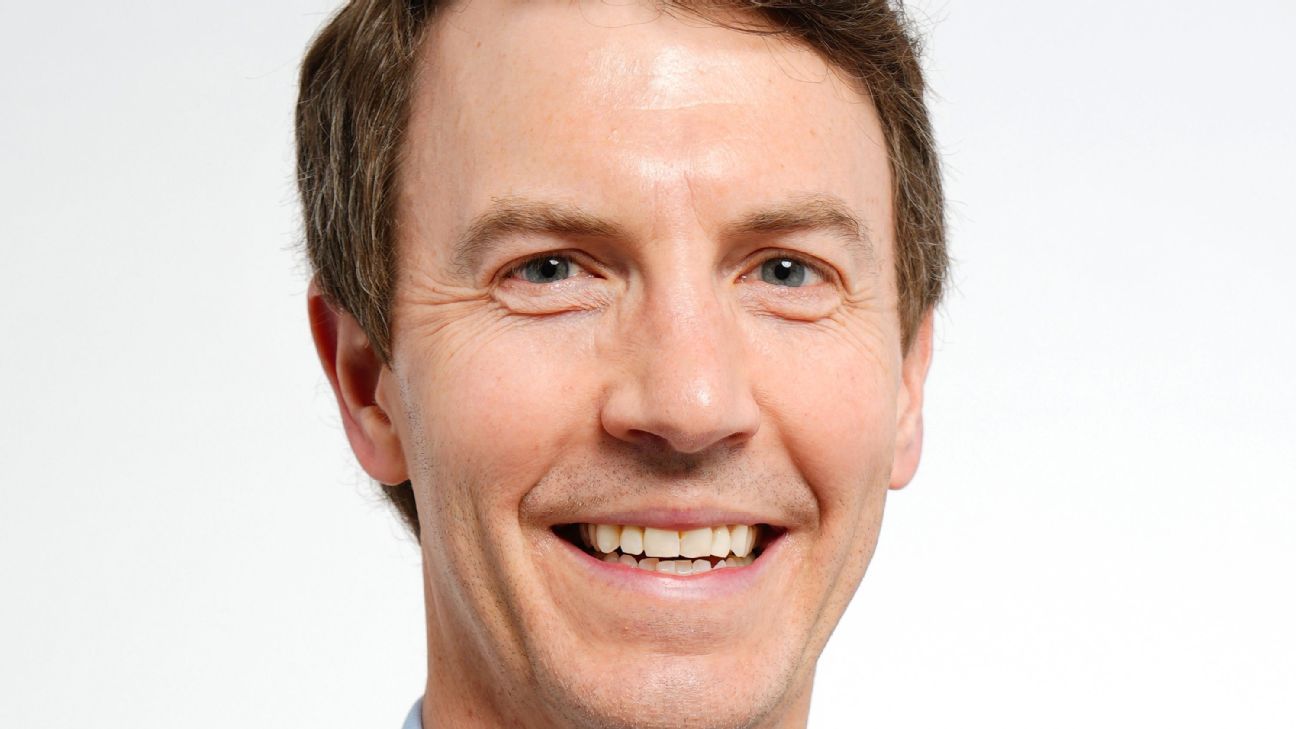
MLB exec to lead new college enforcement arm
Major League Baseball executive Bryan Seeley will become the CEO of the new College Sports Commission, a vital enforcement arm that will have final say in doling out punishments and deciding when rules have been broken in the post-House settlement era.
From the article:
In Seeley, college sports will be getting a seasoned investigator with experience in both the private sector and professional sports. It's the type of background the commissioners sought in their search for the role.
Following Seeley's graduation from Harvard Law School, he served as an assistant U.S. attorney in Washington, D.C., prosecuting federal white-collar fraud and public corruption cases as well as local violent crime.
Joel Goodson
- it's all ball bearings, nowadays
the next step is ground rules for binding players to a school for 2 years, I reckon
I think the thing most negatively impacting college basketball is kids jumping teams year by year, does this do anything to address this, or just throw more money in to increase the free agency pot? Are they going to allow teams to offer multi-year contracts that are enforceable from both sides? Brad is unhappy that we lost Trey White, but thrilled to kick Carey Booth to the curb. Just confused as to how they can ever get college basketball somewhat close to what it used to be.
For decades I have loved the aura of college basketball - rivalries, strategies, atmospheres, and even recruiting drama / excitement. I would, at times, enjoy watching a Clemson / Boston College or Fresno State / Santa Clara game as a college basketball fan. Put the same players in a G-League game and I could care less. At the high end last year, I would love have seen a Houston / Duke matchup, put the same players on two G-League teams and probably not except for Cooper.
The NCAA has created this mess thru their greed.
For decades I have loved the aura of college basketball - rivalries, strategies, atmospheres, and even recruiting drama / excitement. I would, at times, enjoy watching a Clemson / Boston College or Fresno State / Santa Clara game as a college basketball fan. Put the same players in a G-League game and I could care less. At the high end last year, I would love have seen a Houston / Duke matchup, put the same players on two G-League teams and probably not except for Cooper.
The NCAA has created this mess thru their greed.

I'm just going to put this here for anyone this applies to.
Joel Goodson
- it's all ball bearings, nowadays
Under the table payments are back!
they were never gone. yeah, the instances of it are dramatically less, but cheaters will always cheat
RabidDawgClassic
- Los Angeles, CA
I don’t think that has to be the case. In fact, it can be flaunted even more. The ruling stipulates that, for NIL, any payment over a certain amount ($600, I believe) must be scrutinized. But I can’t see that withstanding the first legal challenge because who can dispute it when, say, Twin City Radiator says “why yes, we expect endorsements from this four star offensive lineman to generate $3.5 million in revenue for us. Why do you ask?”Under the table payments are back!
The only real change is that schools will have to make sure their players are doing at least some form of actual endorsing to keep up appearances.

Question. I have:
If NIL is allowing a player to benefit from his name image likeness, does this “salary cap” mean that school can pay for players for actually playing? If so, can schools and players enter multi year contracts that have buyouts and such if a player decides to transfer?
If NIL is allowing a player to benefit from his name image likeness, does this “salary cap” mean that school can pay for players for actually playing? If so, can schools and players enter multi year contracts that have buyouts and such if a player decides to transfer?
I tend to agree. While Nebraska may be capped at $20.5 mil in checks that they can write directly to players; the private/third party/donor deals are NOT capped.Judge Wilken's has approved schools paying players directly. The schools can pay up to 20.5M/year across all players. I don't know if it really alters the current dynamics, since it looks like boosters can still pay NIL.
There is no equity created between them and Northwestern. While Northwestern *might* come up with the $20.5 mil in ticket sales/media deals to give out to players directly themselves; there is no equity created as third party NIL deals are unlimited, giving Nebraska the huge edge regardless.
Nothing prevents the University from making a $100 ticket cost breakdown from being $25 ticket fee/$75 donation either. Once the $20.5 Cap number is released each year, back calculate your 78% operating costs, and 22% ($20.5 mil) to capture the minimum, and set your ticket “price”; while making the rest of the ticket cost a “donation”.
Illini in Italy
- Illini HQ, Florida Panhandle
It's exactly that - pay for play. Next up: athletes classified as employees; negotiation of some type of Collective Bargaining Agreements; player contracts; the death of all college sports except for football and basketball (both men's and women's); and as employees the athletes will no longer be students; New football and basketball minor leagues that aren't as good as the G League or the current football minor leagues; and a mass migration of college fans leaving for the NFL and NBA.Question. I have:
If NIL is allowing a player to benefit from his name image likeness, does this “salary cap” mean that school can pay for players for actually playing? If so, can schools and players enter multi year contracts that have buyouts and such if a player decides to transfer?
Oh, and human sacrifice, dogs and cats living together, mass hysteria.
Joel Goodson
- it's all ball bearings, nowadays
I tend to agree. While Nebraska may be capped at $20.5 mil in checks that they can write directly to players; the private/third party/donor deals are NOT capped.
There is no equity created between them and Northwestern. While Northwestern *might* come up with the $20.5 mil in ticket sales/media deals to give out to players directly themselves; there is no equity created as third party NIL deals are unlimited, giving Nebraska the huge edge regardless.
Nothing prevents the University from making a $100 ticket cost breakdown from being $25 ticket fee/$75 donation either. Once the $20.5 Cap number is released each year, back calculate your 78% operating costs, and 22% ($20.5 mil) to capture the minimum, and set your ticket “price”; while making the rest of the ticket cost a “donation”.
game the system? surely, you jest!
chrisRunner7

- San Diego
I am waiting for a good explanation for how salary caps without collective bargaining is legal and not a violation of antitrust laws...
The whole reason this mess began is the NCAA wanted to limit how much players can earn ($0 in salary plus student-athlete scholarships/benefits) and how much third-party booster groups can pay the players ($0). Now the conferences come together and agree to a $20 million salary cap and $600 capped third-party NIL without being cleared by Deloitte.
If they're paying players now anyway, I don't understand why the schools are not actually pushing for collective bargaining so they can do a legit salary cap (maybe), plus rules on transferring, multi-year contracts, and eligibility. Would solve a lot of the problems that the grumpy fans have.
The whole reason this mess began is the NCAA wanted to limit how much players can earn ($0 in salary plus student-athlete scholarships/benefits) and how much third-party booster groups can pay the players ($0). Now the conferences come together and agree to a $20 million salary cap and $600 capped third-party NIL without being cleared by Deloitte.
If they're paying players now anyway, I don't understand why the schools are not actually pushing for collective bargaining so they can do a legit salary cap (maybe), plus rules on transferring, multi-year contracts, and eligibility. Would solve a lot of the problems that the grumpy fans have.
Wow, lot of hysterics about a thing that we have all known was going to happen for like a year.

- Status
- Not open for further replies.